

Dr. Kimberly Carpenter is a clinical neuroscientist specializing in understanding complex brain-behavior relationships in young children with autism and associated disorders. Her program of research includes four interrelated research themes:
- Understanding the impact of comorbid disorders on clinical and behavioral outcomes of young autistic children
- Identification of early risk factors for the development of psychiatric and neurodevelopmental disorders
- Identification of brain-based biomarkers for group stratification and treatment response tracking in young children
- Improving methods for screening, early identification, and treatment monitoring in autism and associated disorders
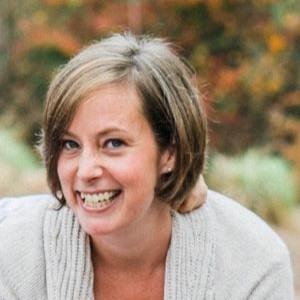
She currently leads an innovative research program exploring the shared and unique impacts that co-occurring anxiety and ADHD have on brain and behavioral biomarkers in young autistic children. She was the first to demonstrate that sensory over-responsivity, a symptom that has been described as part of a number of disorders including autism, anxiety, and ADHD, is a specific and unidirectional risk factor for the development of anxiety disorders in young children. She was also the first to demonstrate that, when accounting for comorbidity among individual anxiety disorders, specific anxiety disorders are associated with phenotypically meaningful differences in brain connectivity using MRI.
Dr. Carpenter has also collaborated with experts in early childhood mental health, computer science, and engineering to develop novel technologies that utilize multi-modal methods via computer vision and machine learning to develop, refine, and test novel screening tools for early identification and treatment monitoring in young children with autism and related disorders.
Current Studies
Hero

COMET

News


Publications
Lab Alumni
These students and trainees have worked on projects in the Carpenter lab, and have since gone on to further education and careers in the field.
|
Name |
Level |
Dates |
|
Aarti Thakkara,c |
Undergraduate |
2013-2015 |
|
Kathleen Campbellb,d |
Medical Student |
2014-2016 |
|
Logan Beyerc,d,e |
Undergraduate |
2014-2017 |
|
Grant O’Brienc |
Undergraduate |
2014-2017 |
|
Selina Wilson |
Undergraduate |
2015-2017 |
|
Elizabeth Adlera,d |
Undergraduate |
2015-2018 |
|
Jacqueline Emersona,c,e |
Undergraduate |
2016-2018 |
|
Lindsey Kuohna |
Undergraduate |
2017-2018 |
|
Dong Dan |
Graduate |
2017-2018 |
|
Mahish Kewalramani |
Undergraduate |
2017-2019 |
|
Maddie Fowlera,c,e |
Undergraduate |
2018-2020 |
|
Taylor Kiefera |
Undergraduate |
2020-2023 |
|
Connor Haugheya |
Undergraduate |
2021-2023 |
|
Charles Fennell |
Post-Bac |
2021-2022 |
|
Nikhil Chaudhrya |
Undergraduate |
2021-2024 |
|
Luong (Liz) Huynh |
Undergraduate |
2021-2022 |
|
Eliana Lemberg |
Post-Bac |
2021-2022 |
|
Adriana Kavoussi |
Psychiatry Resident |
2021-2023 |
|
Meera Gangasani |
Undergraduate |
2022 |
|
Maggie Tripp |
Undergraduate |
2022 |
|
Huseyin Bayazit |
Child and Adolescent Psychiatry Fellow |
2022-2024 |
|
Diana Waters |
Psychiatry Resident |
2022-Current |
|
Jamie Courtland |
Psychiatry Resident |
2022-Current |
|
Angela Claveriae |
Undergraduate |
2023-Current |
|
Geoffrey Chene |
Undergraduate |
2023-Current |
|
Cassie Kao |
Undergraduate |
2024 |
|
Hannah Morgan |
Postdoctoral Scholar |
2024-Current |
|
Alexandra Bey |
Assistant Professor |
2024-Current |
|
Flora Yee |
Undergraduate |
2024-Current |
|
Priyanka Ramulu |
Undergraduate |
2025 |
|
Amy-Ruth Gyang |
Undergraduate |
2025-Current |
Notable outcomes or products resulting from my mentorship
a Completed an Honor’s thesis
b Completed a Master’s thesis
c Matriculated into an MD or PhD program
d Published a manuscript
e Received an award: Harry S Truman Scholarship (Beyer); Duke Undergraduate Research Independent Study Grant (Beyer, Ye); Autism Science Foundation Undergraduate Summer Research Grant (Emerson); Duke Psychology Vertical Integration Summer Program (Fowler, Chen); Duke Deans’ Summer Research Fellowship Award (Chen); Duke Travel Award (Chen); NASA Internship in Biomechanics Research (Claveria).
fSCOPE stands for Scholars Committed to Opportunities in Psychological Education: a training and mentoring program for future psychologists of color