
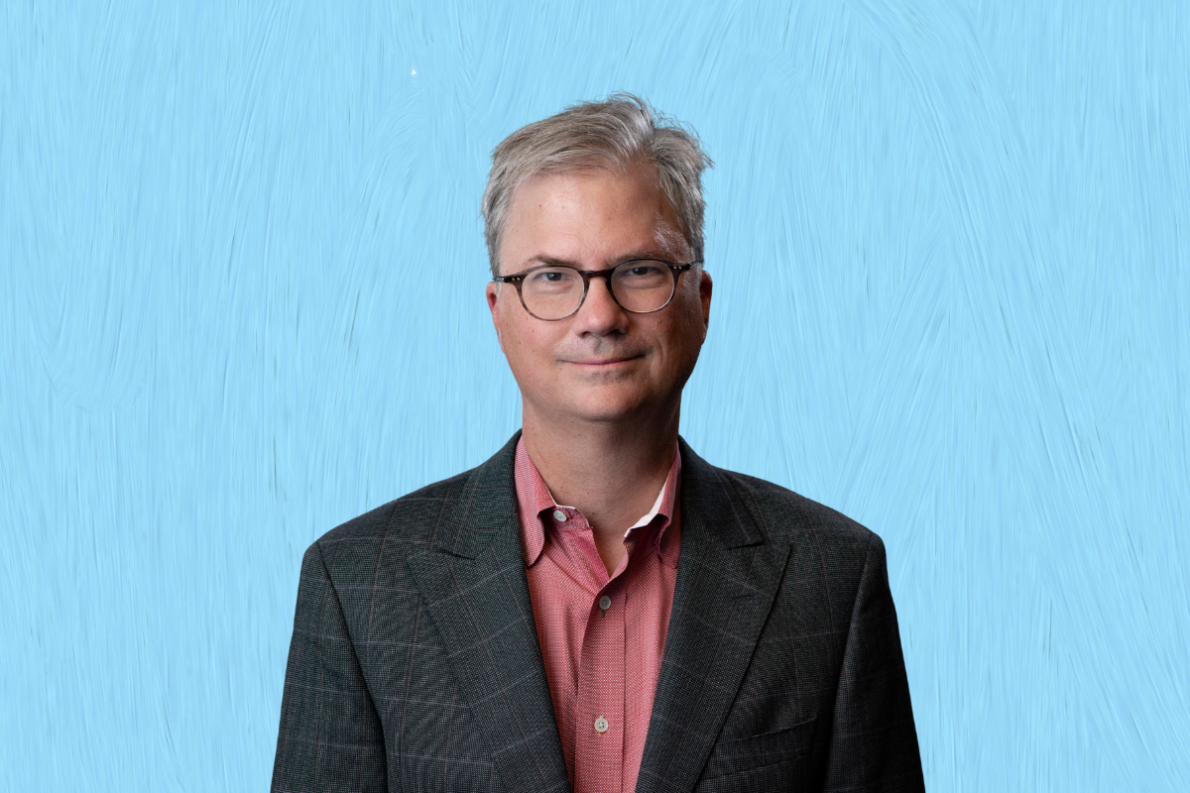
In celebration of Autism Acceptance Month, Holden Thorp, PhD, delivered the keynote seminar in the Duke Center for Autism and Brain Development's 2025-2026 Seminar Series on April 8. Thorp is the editor-in-chief of Science, a family of highly respected scholarly science journals and popular science publications, and a faculty member at George Washington University. He served as the chancellor of the University of North Carolina at Chapel Hill from 2008 to 2013.
Why Thorp?
Thorp is a chemist by training, with a career in university research, teaching, and administration. He publicly disclosed his autism diagnosis in 2024, well after having served at the highest levels of leadership. Throughout his career, he faced obstacles and interpersonal challenges that were later contextualized by this diagnosis. Since then, he has been outspoken about the valuable qualities neurodivergent people offer to society and how we can adapt social and professional environments to help autistic people flourish. This perspective made Thorp uniquely qualified to address our community as the 2026 Autism Acceptance Month keynote speaker.
“We have and need autistic people in the workplace. There are people with different kinds of thinking in the world, and they have a lot to contribute. We should figure out how to work with them.”
- Holden Thorp, PhD
His talk, “A Convergent Model for Autistic Flourishing: How Research and Experience Highlight the Interplay Among Fit, Adaptation, and Accommodation,” drew more than 250 attendees.
A Diagnosis with Contradictions
The science of autism supports two truths that seem to conflict with each other: (1) some autistic traits are common across the spectrum and (2) genetics and other clinical measures suggest distinct autism subtypes. Thorp described a divide in the autism community over these subtypes, particularly whether there can or should be distinctions within the autism spectrum based on a person’s support needs or clinical profiles.
However, he noted, “Arguing over what the real autism is doesn’t produce anything except division. Getting that arguing down is a key for finding better outcomes for everyone”.
Three A’s for Autistic Flourishing
Thorp proposed three approaches to optimize outcomes for autistic people:
- Alignment of autistic traits at a given time with demands of the environment
- Adaptation by autistic people to expectations of the neurotypical world
- Accommodation of autistic traits by neurotypical people and institutions
Many approaches to autistic flourishing only emphasize one of these. Autistic people may be coached only to adapt their own behavior, or only to request accommodations. Other advocates have identified professions that are naturally better aligned with some autistic traits, where less adaptation and accommodation may be necessary. In Thorp’s view, the best outcomes require a combination of approaches. For each individual, figuring out where you’re best aligned, when you can or should adapt to the environment, and when to ask the environment to adapt to you is critical.
Advice for Autistic Young Adults
Thorp shared advice for young autistic adults navigating the transition to adulthood and the workplace: “Get as much support figuring out where your traits fit to what you can and should do. Learn to balance adapting to expectations and asking for what you need, especially precise feedback and instructions,” he said. What the best fit looks like varies from one person to another, but it’s about optimizing opportunities.
He highlighted differences in workplace culture across his own career and described how he was a better fit for certain roles or with a particular group of colleagues.
"Learn to balance adapting to expectations and asking for what you need."
-Holden Thorp, PhD
Adapting Environments to Support Flourishing for Autistic People
The responsibility for autistic flourishing cannot rest solely on an individual’s ability to adapt or mask, Thorp noted. Social and professional environments must also adapt to support different kinds of people.
Invoking Dr. Temple Grandin’s advocacy for different kinds of minds, he said, “We have and need autistic people in the workplace. There are people with different kinds of thinking in the world, and they have a lot to contribute. We should figure out how to work with them.”
Thorp listed ways that workplaces can adjust their values and practices to promote flourishing not only for neurodivergent employees, but for everyone:
- Don’t punish people for traits that don’t cause anyone any harm, like poor eye contact or stimming.
- Reward results, not style.
- Make expectations explicit in writing.
- Allow flexible work environments.
- Take the guesswork out of teamwork with clear project management.
Beyond existing in workplaces as employees, the world needs more autistic leaders, Thorp said noting that leadership is too often judged by interpersonal style rather than results. He seeks to shatter long-held ideas of “executive presence” that suggest extroverted “people persons” make the best leaders.
For Thorp, autism acceptance means that some common autistic traits that others may find inconvenient are actually well-suited for many leadership roles. These qualities include using precise language and a direct communication style, understanding complex systems, thinking in novel ways, and being driven by a desire to reduce uncertainty.
About the Duke Center for Autism Seminar Series
The monthly Duke Center for Autism Seminar Series puts autism researchers, clinicians, and self-advocates into conversation with a global audience. Anchored by presentations from Duke Autism Center of Excellence study investigators and including invited speakers from around the world, the series brings Duke’s expertise to the world, and the world’s expertise to Duke.
The final presentation in the 2025-2026 series will be on Wednesday, May 20 at 4pm ET, featuring Jamie Pearson, PhD, from NC State University. Register for this event here.
More information about the 2026-2027 seminar series will be available this summer.