

A Humble Beginning
A small faculty gathering in 2014 becomes a cornerstone of the Duke Center for Autism and Brain Development.
“The first one was about nine of us sitting around a conference table in the Child Development and Behavioral Health building,” Lauren Franz, MBChB, MPH, director of the Duke Center for Autism and Brain Development, recalls of the first meeting in what would later become the Duke Center for Autism Seminar Series. Clinical psychologist Nancy Zucker, PhD, professor of psychiatry and behavioral sciences, was presenting on feeding issues in autistic children. It was February 2014.
"This seminar series started as a way to bring faculty, students, and staff at the center together to hear from a researcher outside of our center. Now it has grown to a world-wide monthly event that connects the center to scientists, parents, self-advocates, and clinicians across the globe,” said Geraldine Dawson, PhD, founding director and William Cleland Distinguished Professor of Psychiatry.
The monthly “Autism Clinical Seminar,” as it was originally named, began shortly after Dawson came to Duke and established the center. The series originally served as an internal opportunity to share clinical resources and learn from colleagues. “We will discuss journal articles, feature speakers, and have case presentations. Please feel free to invite folks you think might be interested,” Dawson wrote in the first email to a small group of faculty.
From Internal Forum to Campus-Wide Resource
Growing interest across Duke quickly expands the seminar’s reach and audience.
That open invitation spread quickly to colleagues throughout Duke Psychiatry & Behavioral Sciences, Duke Health, and the Duke University School of Medicine. Each month, more people – from Duke trainees to social workers to faculty members – asked to be added to the email list for the seminar announcements. Colleagues in neuroscience, psychology, pediatrics, and other departments came to learn more about autism.
The series quickly outgrew the small conference room, first moving to a larger meeting room and shortly thereafter to an auditorium, hosting as many as 50 attendees.
As the series grew, junior faculty and staff took over planning and coordinating the series in 2019. The current planning committee includes:
Alexandra Bey, MD, PhD | Marika Coffman, PhD | Anna Laakman, PhD | Evan Watson
Going Virtual, Going Global
The pandemic-era shift online transforms the series into an international event.
The series went virtual in 2020 due to COVID-19 social distancing requirements. The move to a webinar gave the seminar team access to a broader pool of potential presenters – across the U.S. and even internationally – and opened up attendance to a far wider audience. In-person seminars had limited the team to inviting local presenters from Duke, UNC, and state agencies such as the North Carolina Department of Health and Human Services (NCDHHS). With the transition to a virtual platform, the 2020-2021 lineup included presenters from the University of Washington, La Trobe University in Australia, and Brown University.
“It gives us here at Duke a chance to hear from the world’s experts, and to share Duke’s experts with the world,”
- Alexandra Bey, MD, PhD, assistant professor of psychiatry
This shift also made it easy to advertise the series on social media and send registration links via email. The audience grew quickly as presenters shared the talk registration information with their own networks and on social media. The online registration process also allows people to opt in to the center’s newsletter and emails about the series. More than 1,700 people now receive notices about upcoming talks.
In 2022, the center started offering continuing education (CE) credit for the seminars, which has helped many licensed psychologist attendees keep their licensure current. Offering CE credit has increased seminar attendance even further, and to date, the center has provided more than 1,200 certificates to attendees.
A Worldwide Community of Learners
Researchers, clinicians, educators, advocates, and families join from dozens of countries.
The series, now open to the public, brings leading experts into conversation with a global audience. Viewers have logged in from at least 56 different countries, and the 2025-2026 series averaged more than 250 registrants per presentation. Community members – teachers, parents, and school administrators – interested in learning about the latest autism research, advocacy, and clinical approaches frequently attend alongside researchers, psychiatrists and psychologists, and representatives from state health and human services agencies.
International experts are also represented, with presenters broadcasting from Australia, Canada, South Africa, Israel, and the United Kingdom. “It gives us here at Duke a chance to hear from the world’s experts, and to share Duke’s experts with the world,” said assistant professor Alexandra Bey, MD, PhD, a child and adolescent psychiatrist and researcher who co-chairs the committee that coordinates the presenters.
By the Numbers
-
 Countries highlighted in green represent locations of registered attendees since the series went online in 2020. Location information was voluntarily provided at registration.
 -
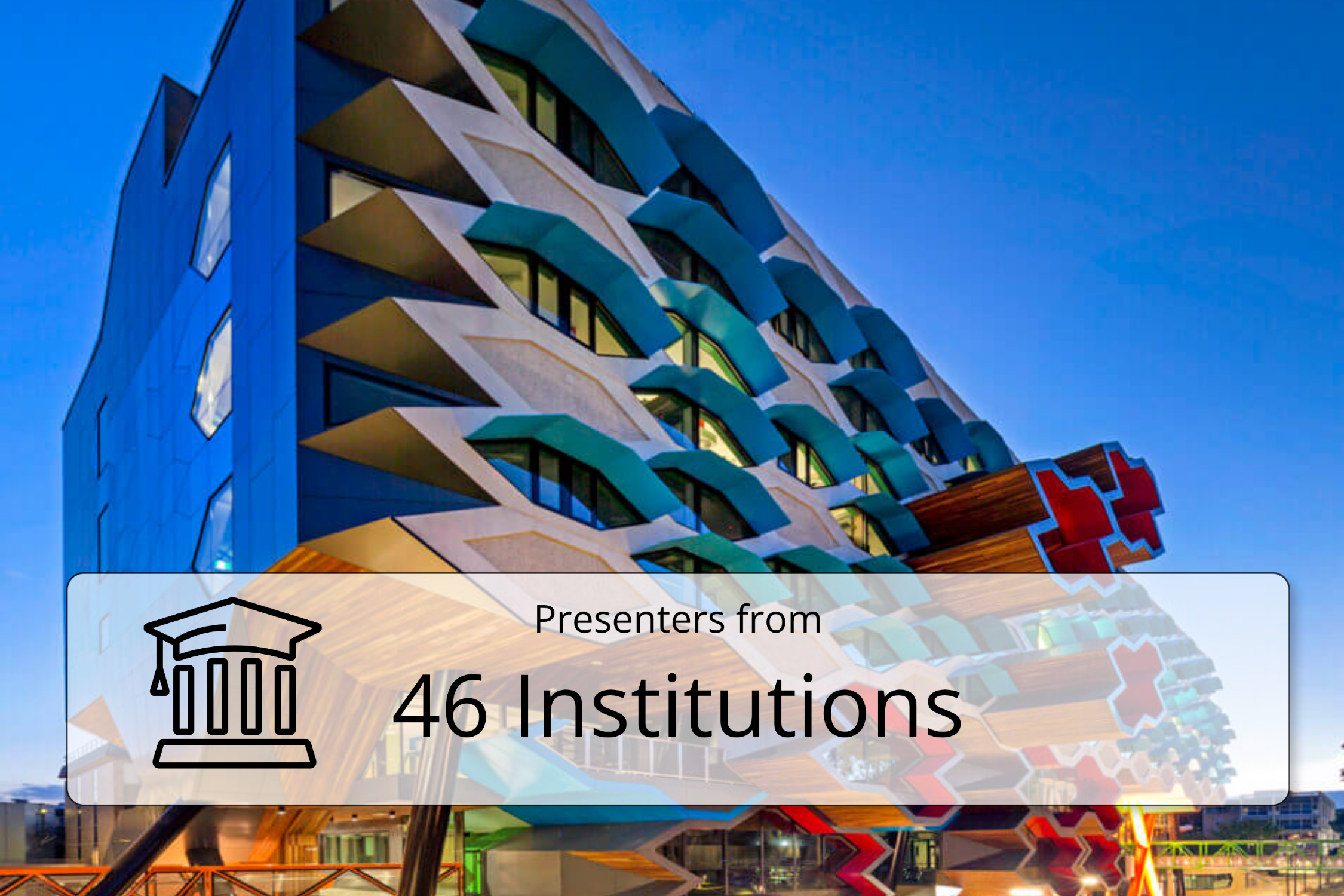 La Trobe University in Melbourne is one of 46 different universities and organizations to have a presenter at the series. Photo: Sims Molecular Science Building at La Trobe University.
 -
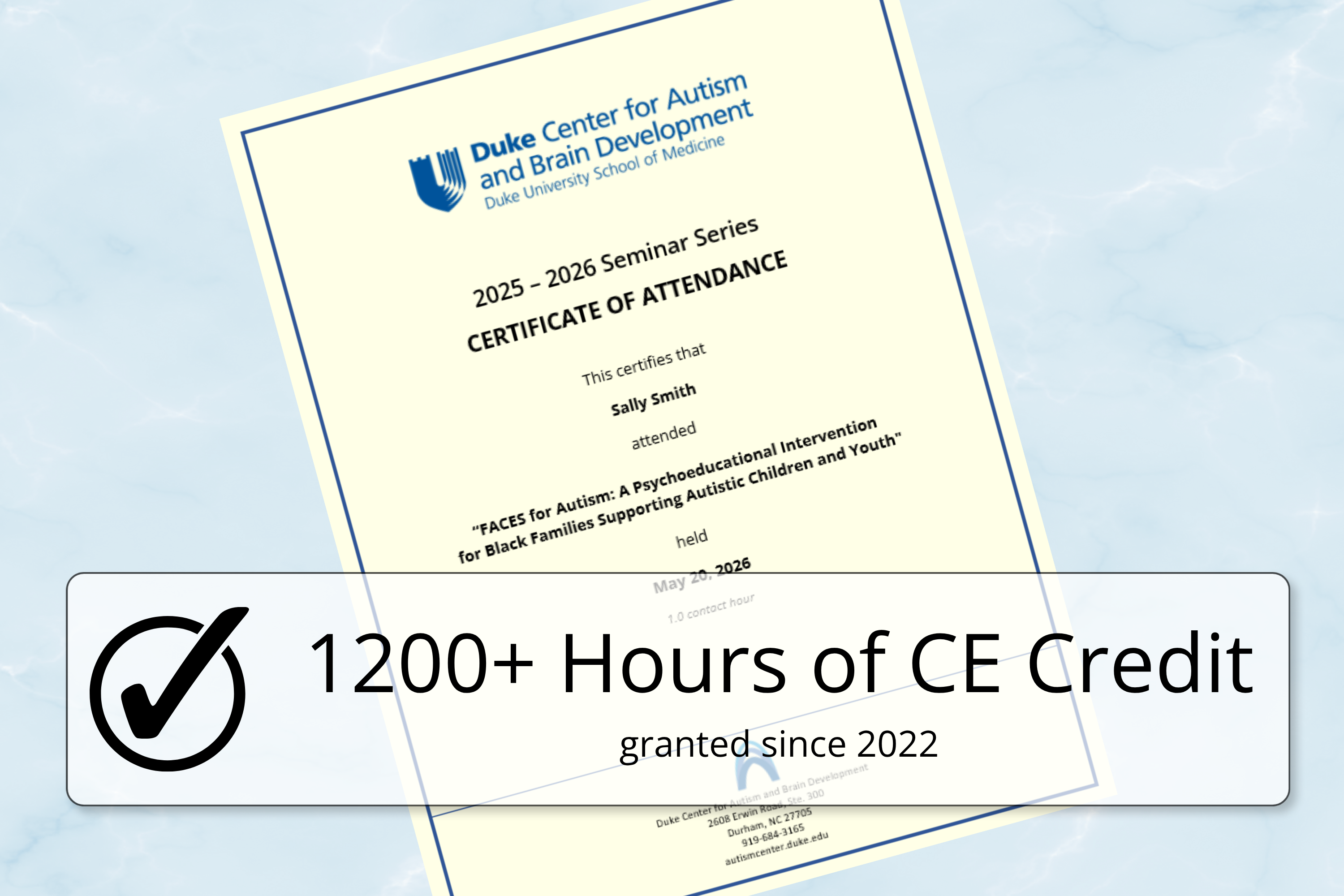 Viewers who attend the full hour presentation and elect to receive a certificate of attendance can count the seminars towards professional continuing education credits for licensure.
 -
 Canadian MP Mike Lake speaks to a large audience at Duke's 2019 Autism Acceptance Event. More than 2800 people have registered to attend a Duke autism seminar.
 -
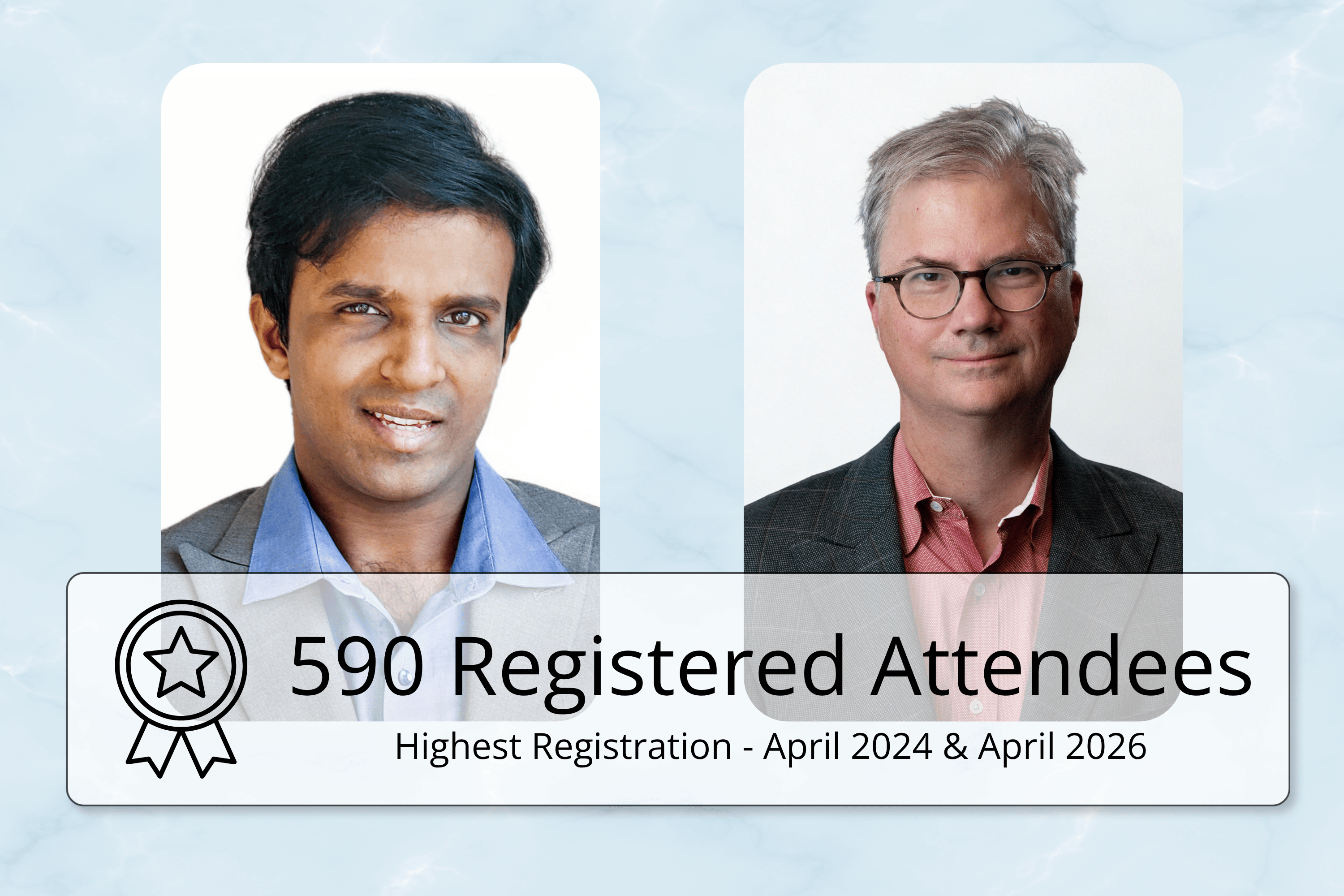 Hari Srinivasan's (left) 2024 seminar "Redefine the Table" was the highest-attended seminar in the series until matched by Holden Thorp's "Alignment, Adaptation, Accommodation" in 2026.
Autism Acceptance at the Center
Annual Autism Acceptance Month keynote events spotlight lived experience, advocacy, and inclusion.
The center also hosts an annual Autism Acceptance Month presentation each April. Held in some of the larger auditoriums on Duke’s campus until 2020, these events have become a keynote event in the seminar series and are among the best attended events each year.
Autism Acceptance Month presentations showcase self-advocates, community members such as parents of autistic people, or public servants who focus on more accessible, non-clinical topics. In 2024, Hari Srinivasan, PhD, then a PhD candidate at Vanderbilt University, drew the series’ largest audience to date, which was later matched by the 2026 keynote featuring Holden Thorp, PhD.
Advancing Research, Education, and Care
The seminar series supports the center’s mission and fosters collaboration across disciplines.
The Duke Center for Autism and Brain Development’s Autism Seminar Series has evolved into an invaluable continuing education forum that helps advance the center’s core missions of research, clinical care, education, and advocacy. We look forward to another great lineup of presenters for the 2026-27 series, where we’ll learn more about the latest research, techniques, and perspectives from the autism community.
"This seminar series started as a way to bring faculty, students, and staff at the center together to hear from a researcher outside of our center. Now it has grown to a world-wide monthly event that connects the center to scientists, parents, self-advocates, and clinicians across the globe,”
- Geraldine Dawson, PhD, founding director and William Cleland Distinguished Professor of Psychiatry.
Timeline of the Duke Autism Seminar Series 2014-2026
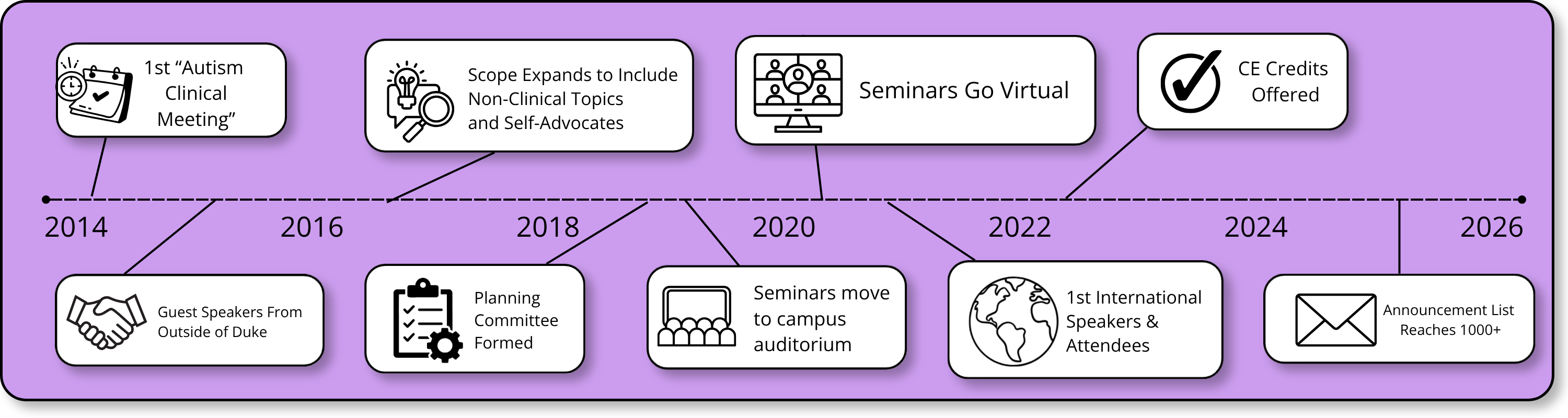
- 2014 - First "Autism Clinical Meeting"
- 2015 - Guest presenters are invited from outside of Duke University.
- 2016 - Scope of the seminars expands to include non-clinical topics and self-advocates.
- 2019 - Planning committee of junior faculty and staff is formed.
- 2019 - Seminars move to larger venues and auditoriums on campus.
- 2020 - Seminars go virtual.
- 2020 - First international presenters and attendees participate.
- 2022 - CE credits are offered for attendees.
- 2025 - Email announcement list reaches 1000+ people.