
Scientific research articles can be difficult to read, even for experts, and some are only available through paid journal subscriptions.
To make our work more accessible, we’ve selected key publications from our team and summarized the main findings in clear, everyday language.
When available, we also include a link to the full article or abstract so you can explore further if you’d like.



Designing an AI-based Autism Screening Tool with Users in Mind
Why We Did This StudyEarly identification of autism can help children and families access evaluation, services, and support sooner. Pediatricians routinely screen toddlers for autism during 18- and 24-month well-child visits using a caregiver questionnaire called the Modified Checklist for Autism in Toddlers, Revised with Follow-Up (M-CHAT-R/F). While this screening tool is helpful, researchers are developing new digital approaches to improve the consistency and accuracy of early autism identification.

Clinical notes may capture speech-language concerns before diagnosis codes do
Doctors often record concerns about a child's speech and language before assigning a formal diagnosis. In our study, only about half of children with documented concerns had a diagnosis recorded at that visit, and many received one later. This pattern may reflect ongoing monitoring over time before a diagnosis is recorded.
Read the open-access paper from Duke and North Carolina Central University researchers at https://academic.oup.com/jamiaopen/article/9/3/ooag090/8707577
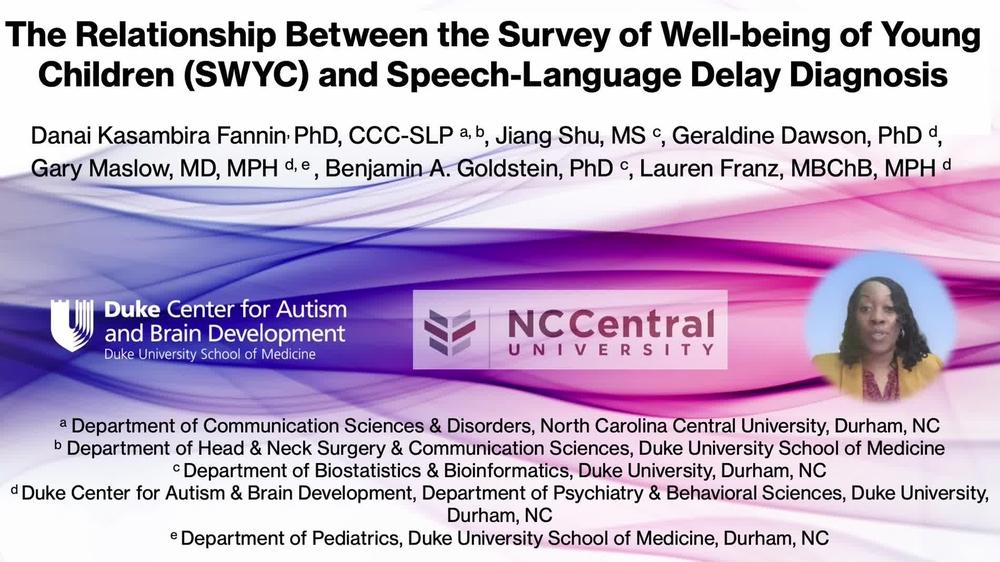
Video Abstract: Can developmental screening tools help flag speech-language delays at age 2?
Can developmental screening tools help flag speech-language delays at age 2?
In a study of 7,198 children using electronic health records, lower SWYC scores—reflecting greater developmental concern— were strongly associated with speech-language delay diagnoses at the 24-month visit, with differences observed across insurance type and demographic groups.

Identifying ADHD in Young Autistic Children
Many young autistic children also have ADHD, which can impact the child’s experiences. However, figuring out which autistic children have ADHD can be difficult.
This new paper from Duke researchers describes an approach that providers can take to identify ADHD in autistic kids.
Read the full paper here.
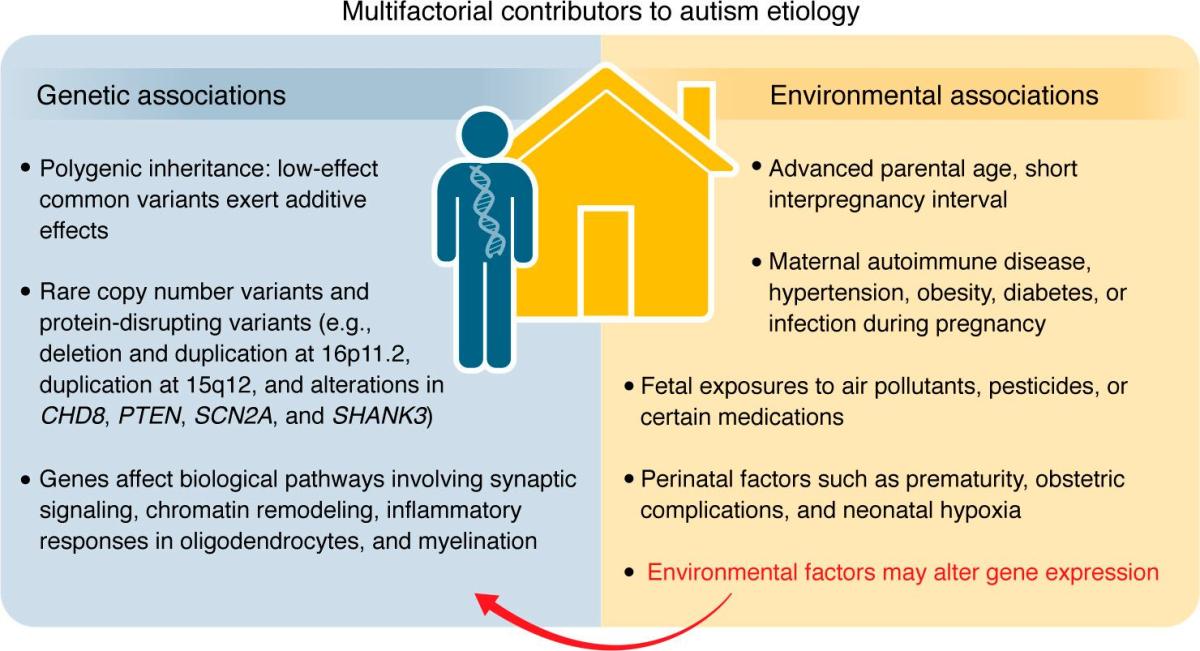
Duke Researchers Explain "Threshold" Model of Factors Contributing to Autism
Autism develops from many different influences during early brain development. In this article, Duke researchers Alexandra Bey, MD, PhD, Scott Soderling, PhD, and Geraldine Dawson, PhD, explain a “threshold” model: no single gene or factor causes autism on its own. Instead, they describe how many small genetic differences, together with certain environmental influences before birth, can add up and increase the likelihood that a child will develop autism.
Read the full article (open access) here.

Machine Learning Model Improves on Long-Term Diagnosis Prediction
Doctors sometimes use a binary “yes or no” classification to predict a long-term diagnosis using patient records, but this model doesn’t work well when patients stop coming in for visits, leaving incomplete data.

SenseToKnow App Spots Differences Between Autistic and Non-Autistic Kids Aged 3-8
Duke researchers created the SenseToKnow app to help spot signs of autism in children by tracking how they interact with the videos and games in the app. The app was first tested with toddlers and showed promising results. In a recent study with kids aged 3 to 8, the app showed clear differences between autistic and non-autistic children. With further testing, the app might be useful for autism detection in older children.

Behavioral Characteristics of Toddlers Later Identified with an Autism Diagnosis, ADHD Symptoms, or Combined Autism and ADHD Symptoms
Attention-deficit hyperactivity disorder (ADHD) is common among autistic people. Less is known about the behavioral characteristics of children who have both conditions when they are toddlers.
A recent study led by associate professor Naomi Davis, PhD, asked caregivers to answer questions about their toddlers’ behavior, including whether they noticed signs of autism or ADHD. The children were then followed over several years. Some were diagnosed with autism only or autism plus ADHD.